 +86-576-82670088
 Fengjiang Industrial Park, Luqiao District, Taizhou City, Zhejiang Province, China


 English
 русский
 Español
Industry News ·
Industry News ·
Industry News ·
Industry News ·
Industry News ·
Industry News ·
Industry News ·
Industry News ·
Industry News ·
Industry News ·
Industry News ·
Industry News ·
Industry News ·
Industry News ·
Industry News ·
Industry News ·
Solar Energy Cable: What Fails First on a Roof, and in What Order
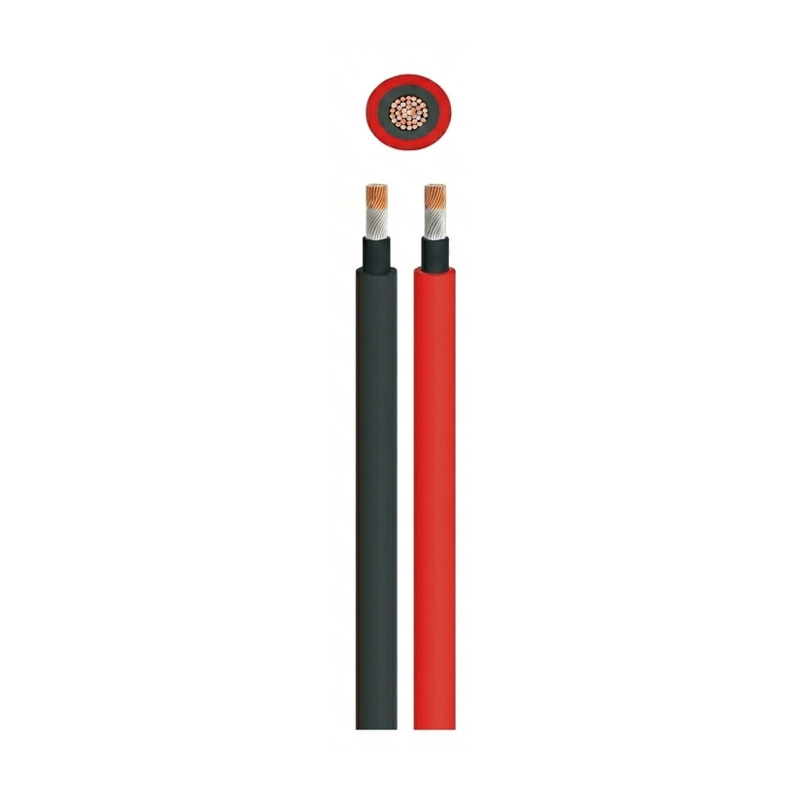
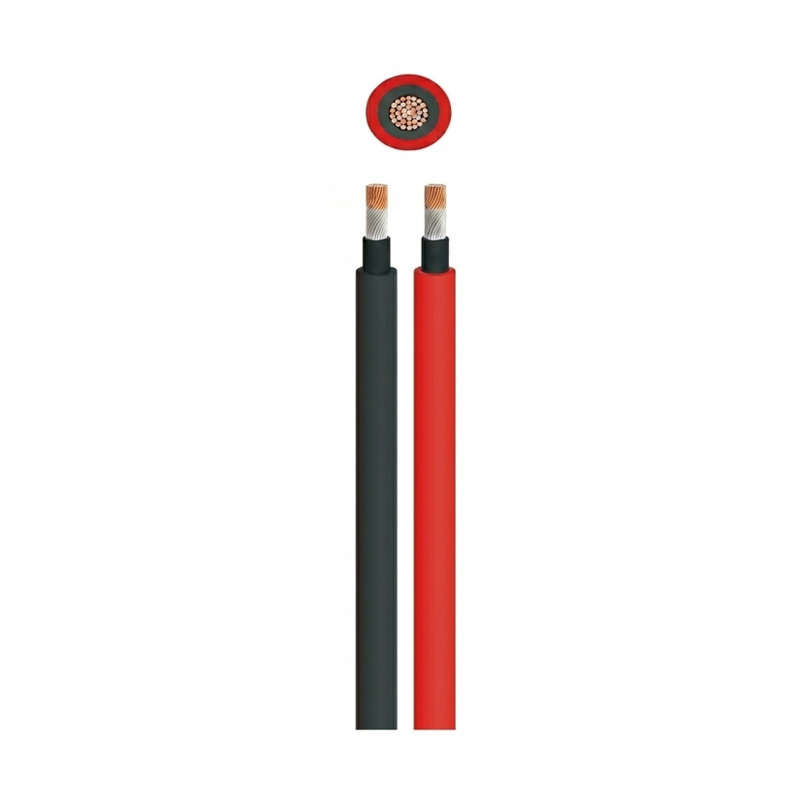
Solar energy cable is usually specified by cross-section and price, but failures on real roofs follow a fairly predictable order. The jacket cracks first, then heat ages the insulation, then a connector overheats, and finally mechanical damage from installation finishes the job. Understanding that order changes what a buyer should ask, because each failure has a different cause and a different point in the project where it can be prevented.
The jacket cracks before anything else fails
The first sign of trouble is usually a jacket that has hardened and cracked along the top of a rail or where the cable bends around a clip. Sunlight, ozone, and heat all attack the jacket, and a compound that is merely weather-resistant may last only a few seasons. Buyers should ask what compound the jacket uses, how it was tested for UV and ozone, and for how long the test ran. A short test tells the buyer little about a cable that will sit outdoors for twenty years, and a compound that is cheaper at the quotation stage is often the one that cracks first.
Heat ages the insulation from the inside
Once the jacket is compromised, or even before it, heat begins to age the insulation. Solar cables carry current that rises and falls with sunlight, and the conductor temperature follows. The cable should be rated for the conductor temperature it will reach, and the current rating should state whether it assumes free air, conduit, or bundling. Three points are worth checking during design:
- Whether the current rating is based on free air, since bundled cables run hotter than the catalogue figure assumes;
- Whether the insulation temperature rating covers the summer peak on a roof, which can be well above ambient;
- Whether the cable is rated for continuous DC voltage, because an AC-rated cable may not be suitable for a string.
A cable that is adequate on paper can still age quickly when it is clipped in a bundle under a panel.
Connectors overheat before the cable does
In many installations, the first electrical failure appears at the connector rather than in the cable. A connector crimped onto the wrong insulation diameter, or a connector from a different system than the cable, creates a joint with higher resistance, and that joint heats under load. Buyers should ask how connectors are matched to the cable, whether the connector and cable come from the same system, and whether the crimp is checked. Mismatched connectors are a common cause of hot joints, and the problem often appears months after commissioning rather than at the first test.
Mechanical damage arrives with installation
Installation is where a good cable is most often damaged. Pulling over a rough roof edge, bending tighter than the minimum radius, or over-tensioning during clipping all leave damage that shows up later. Buyers should ask for installation guidance that reflects real roof conditions, and should confirm that the minimum bend radius and pulling tension are stated clearly. A cable that passes a bench test can still fail because of how it was installed.
Traceability is what remains when a failure appears
Because failures often appear years after installation, traceability decides whether a problem can be investigated. Buyers should ask whether the cable can be traced to a production batch, whether test records are kept, and whether certificates are available for the delivery. A cable without traceable records is difficult to defend in a warranty discussion, and a supplier that keeps batch records is easier to work with than one that does not.
What to confirm before ordering
Rather than comparing cross-section and price, buyers can ask what jacket compound is used and how it was tested, how the current rating accounts for bundling and conduit, how connectors are matched to the cable, and whether batch records are available. Suppliers who answer with test data and installation guidance are easier to trust than those who answer with a data sheet. The cable is a familiar product; the difference lies in whether the failure order was understood before the first drum was ordered.

Ready to Begin?
Product Categories
Contact Information
 hsdx@hongshengcable.com
 +86-576-82670088
 +86-18858611799
 Fengjiang Industrial Park, Luqiao District, Taizhou City, Zhejiang Province, China
QR Code
Copyright © Hongsheng Wire and Cable Co., Ltd. All rights reserved.
